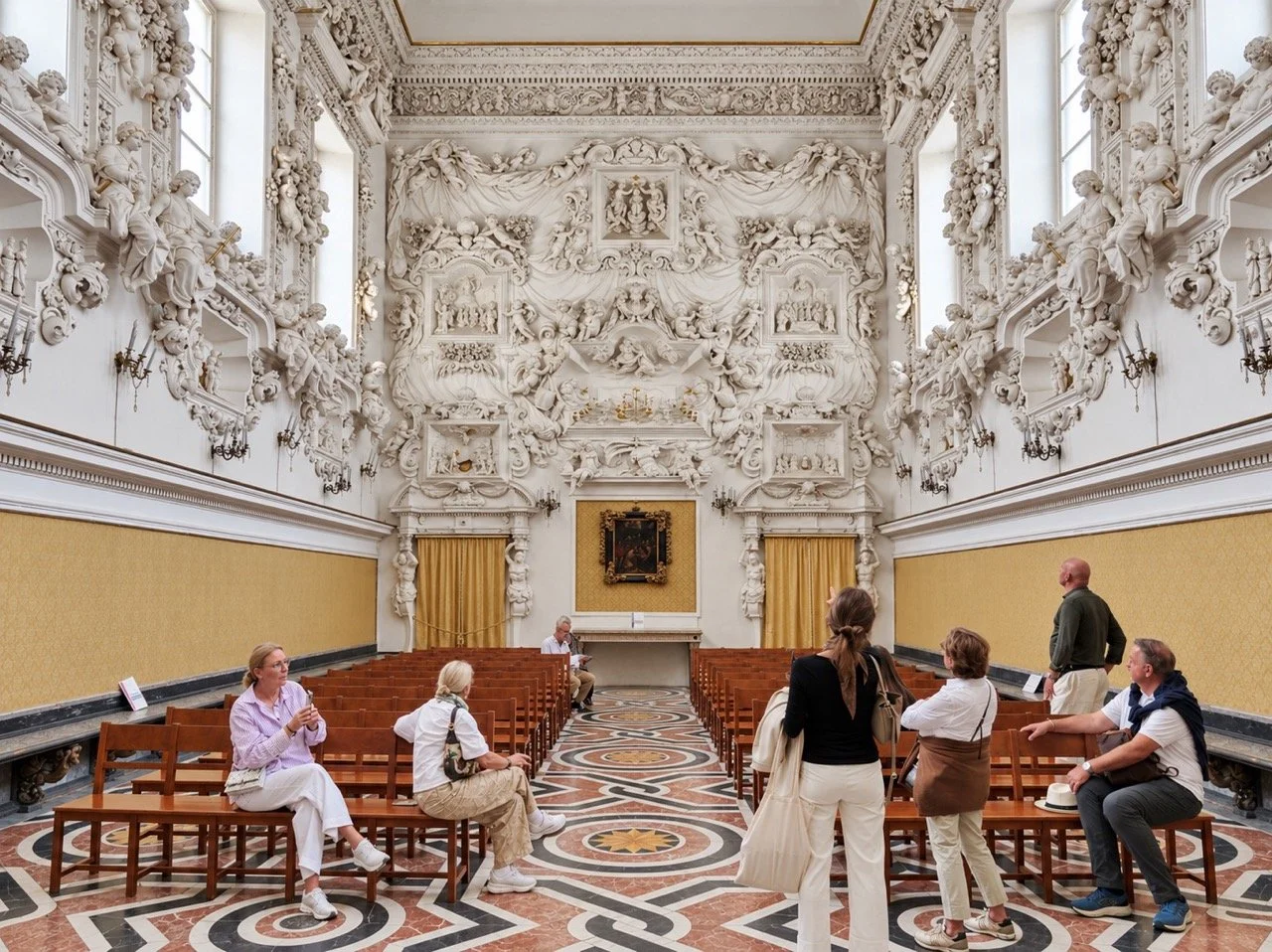
A little over two weeks ago, we returned from six days in Sicily. We had spent months preparing this journey, bringing together places, people and experiences that we wanted to share with our guests. And although I knew the programme well, there is something quite different about finally experiencing it together.
One of the things I enjoyed most was seeing how everyone began discovering the connections between the places we visited, the people we met and the stories we encountered along the way.
During our stay in Palermo, we visited Palazzo Butera, a magnificent historic palazzo that collectors Massimo and Francesca Valsecchi have restored and opened to the public.
We first arrived for lunch at Le Cattive, the palazzo's restaurant, with its beautiful terrace overlooking the harbour. That day, we were guided by curator Valentina Bruschi, who has helped shape Palermo's contemporary art scene through her exhibitions, cultural projects and work with museum collections. Her perspective and firsthand knowledge were an experience in themselves.
Inside, we happened to meet Francesca, who casually began chatting with us. It was lovely to encounter her in this place that she and her husband have created, and where they also live.
After lunch, Massimo was waiting for us in the courtyard. He welcomed everyone and later showed us parts of their private living quarters. What I particularly enjoyed was how natural and unpretentious the encounter felt. Here was someone who had undertaken an enormous project of restoration and cultural preservation, yet was simply happy to welcome us and share something he cared deeply about.
Throughout the journey, we had many experiences like this. We met people in their homes, studios and places of work, hearing about their projects and ideas directly from them. It gave us an opportunity to discover Sicily not only through its history, architecture and artistic heritage, but also through the people contributing to its culture today.
One of the things I enjoy most about creating these journeys is bringing together experiences that complement and build on one another. Much like composing a movement class, curating an exhibition or putting together a multi-course dinner, I find that the way individual elements are arranged makes an enormous difference to how we experience them.
For A Journey in Sicily, we wanted each encounter to add something to what we had already seen and experienced, allowing our guests to discover connections between the island's history, architecture, contemporary art, food and the people who live and work there.
One example was our visit to the studio of artist Ignazio Mortellaro in Palermo. His studio is an extraordinary place in itself, with original medieval streets running through the building. You can still recognise the old street levels and the places where horses were once tied, offering a glimpse of how Palermo looked and functioned centuries ago.
Ignazio works extensively with site-specific installations, commissions and performances, so rather than finding a studio filled with finished artworks, we encountered materials, experiments and ideas in different stages of development. For some of our guests, it was initially difficult to imagine what these processes might eventually lead to. Later, at Francesco Pantaleone's gallery, we encountered his finished works, giving everyone a chance to connect what they had seen in the studio with the artworks themselves.
A few days later, when we travelled to Sicily's southern coast, we encountered his work once again.
During our visit to Ulmo for a wine tasting, Vito Planeta personally introduced us to a new cultural space he had created in memory of his recently deceased uncle, Vito Sr. It houses a library, exhibitions and artistic projects, including commissions developed with contemporary artists. Among them was a bookshelf designed by Ignazio Mortellaro.
It was lovely to see our guests recognise the artist and connect these different encounters. What had initially been difficult to imagine in the studio became clearer through seeing his work in the gallery and finally as part of a project created for a particular place and purpose.
This is something I particularly appreciate about Sicily. Its history of cultural exchange is visible in its architecture, art, traditions and everyday life, and continues through the people shaping its culture today. Experiencing these different aspects in relation to one another gives you a much richer understanding of the place.
Of course, the people we travelled with were just as important to the experience. We had a fantastic group, full of curiosity and with a great sense of humour. Whether we were exploring a historic building, meeting an artist or sitting together over a meal, everyone brought their own interests and observations into the conversations.
That's something I particularly enjoy about travelling in a small group. Someone notices a detail you might have overlooked, asks a question you hadn't considered or brings a completely different perspective. And there were plenty of spontaneous moments and laughter along the way.
Food and wine were naturally an important part of our journey, too. Sicily's culinary traditions are closely connected to its history and landscape, and from traditional Palermitan restaurants to the wines and cuisine of the Planeta estates, we had plenty of opportunities to explore them. Our meals also gave us time to continue conversations, exchange impressions and simply enjoy each other's company.
Looking back, I am particularly happy with how the journey came together. After months of preparation, seeing everyone enjoy the encounters, discover connections and bring their own perspectives into the experience was exactly what we had hoped for.
We have already developed new journeys for next year, and I look forward to sharing more of the places, people and experiences that interest and inspire us. As much as I enjoy discovering these things myself, I find even greater pleasure in sharing them with others.