What Are We Actually Training When We Train Movement?
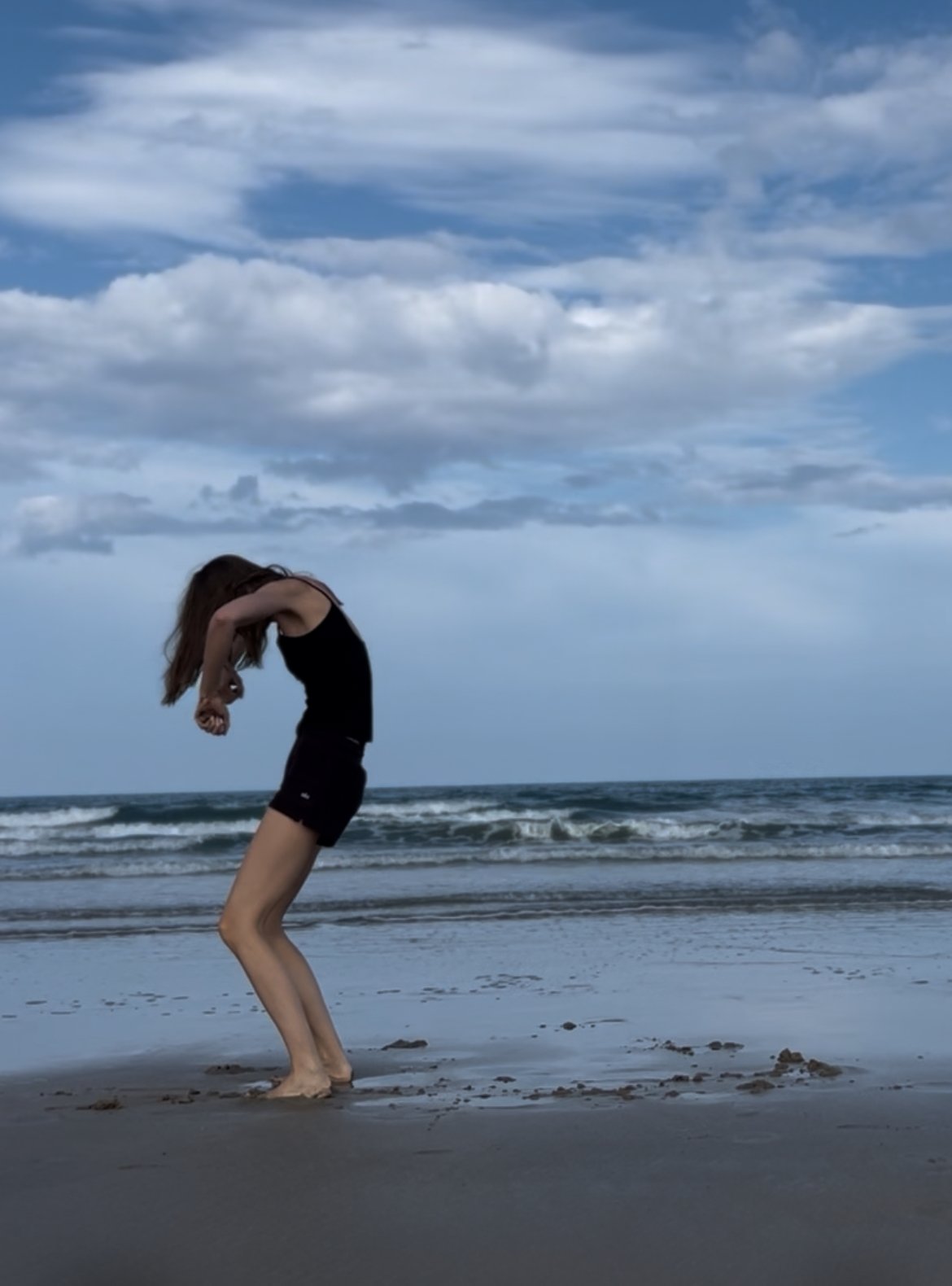
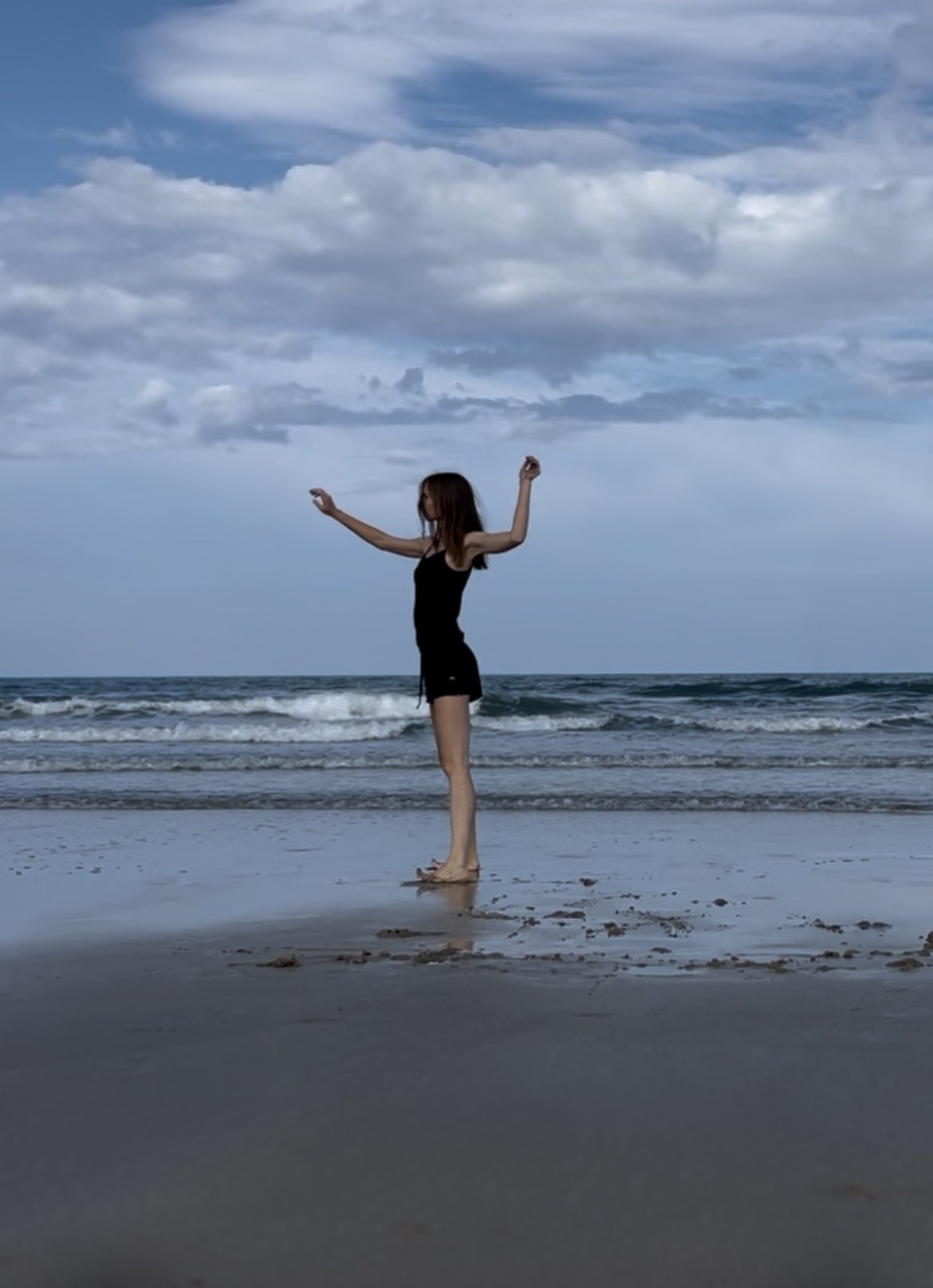
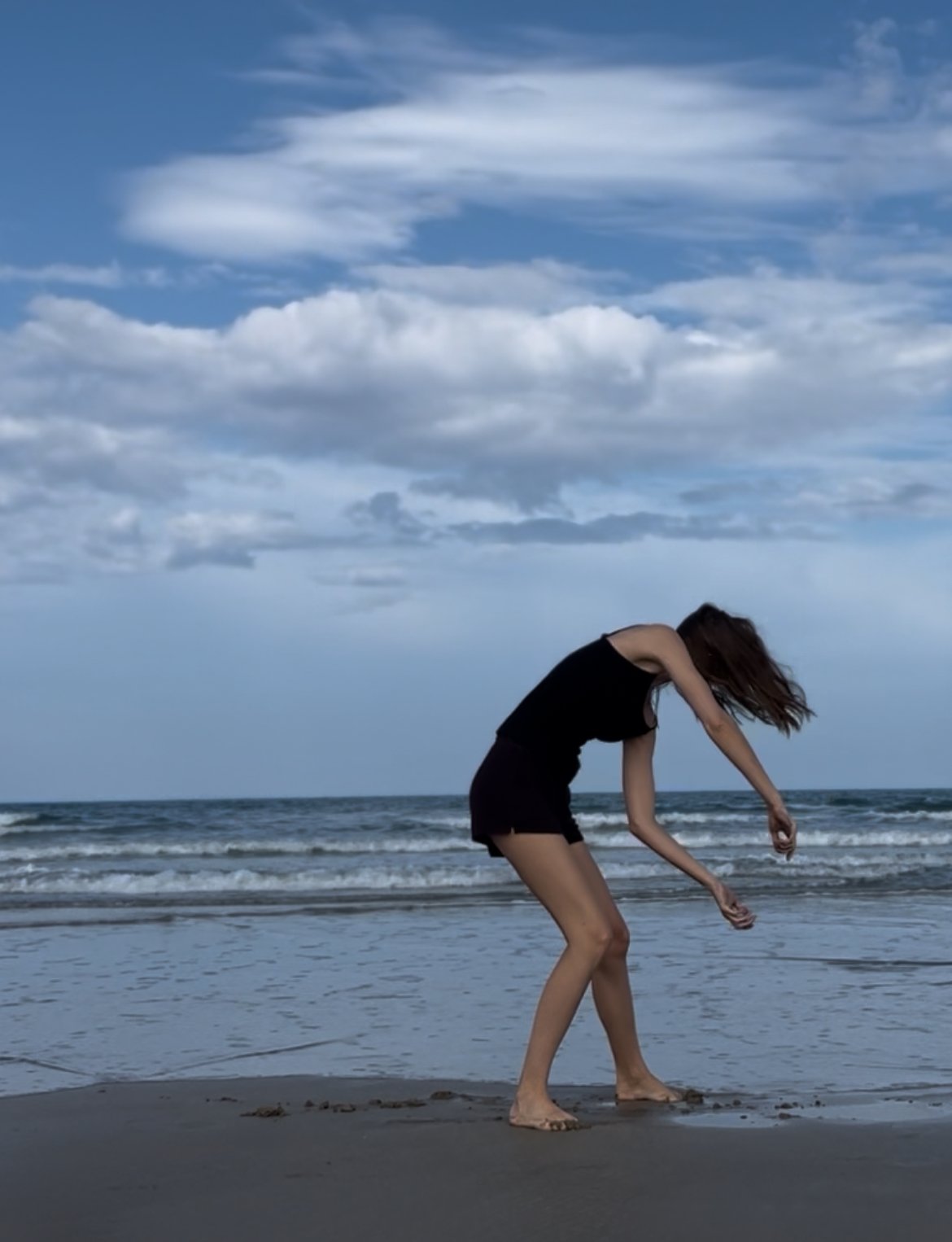
As I continue to refine my own movement practice and my Light Space Movement method, I spend a lot of time looking at other forms of movement. I take classes, workshops and trainings, watch teachers, learn movement sequences and try to understand what different practices are interested in. I am particularly drawn to practices that work with more complex movement patterns, such as primal and animal movement, as well as Tai Chi and Qigong. But I also keep returning to yoga, Pilates, barre and calisthenics.
I look at them from several perspectives. First, I am interested in their movement vocabulary: what movements and patterns does a practice contain, and what possibilities does it give the body? Then I look at how these movements are taught. What does the teacher explain? What are students asked to pay attention to? What constitutes success within that practice?
But increasingly, I find myself interested in another question: how is the movement actually being done?
Where does it begin? How does it travel through the body? Where does the body produce force, and where does it use more force than necessary? How is weight used and distributed? Does the whole body participate, or are individual parts doing most of the work? Can the person remain mobile and responsive while producing strength? And finally, how much of what is being learned can be transferred into other movements and into daily life?
This is where I have begun to notice a recurring difference between practices.
Strength and flexibility are not the same as movement skill
In many contemporary movement practices, strength and flexibility are major measures of physical capability. This is particularly visible in calisthenics, Pilates, barre, primal movement and animal-inspired practices, but it also appears in much contemporary yoga.
There is much that I like about these forms. Calisthenics develops remarkable strength and body control. Yoga offers an enormous vocabulary of interesting and challenging shapes. Animal and primal movement explore ways of travelling across the floor that we rarely encounter in ordinary life. They ask us to support ourselves on our hands, change direction, coordinate several parts of the body and move in unfamiliar relationships to gravity. I particularly enjoy using some of these patterns in workshops because they are challenging, playful and fun to explore.
But when I watch how they are often taught and performed, I notice something else.
A movement is demonstrated and then repeated. If it is difficult, the solution is often to become stronger, more flexible, or simply practise until the body can perform it. Mobility is frequently approached through stretching, strengthening joints and gradually pushing further into a range of motion. In Pilates and barre, the work can become even more deliberately muscular: small repetitive movements, increasing fatigue, the familiar encouragement to keep going when the muscle begins to burn.
None of these things are necessarily a problem. Strength matters. Flexibility matters. Repetition matters. I use all three in my own practice. What interests me is what they don't necessarily teach.
I sometimes watch extremely strong and flexible teachers who can perform movements that I cannot perform, but I can also see how much effort they are using. The movement is possible because they are strong enough to make it possible. There is additional tension, a lot of work coming from the limbs, or individual parts of the body doing the job rather than the movement being distributed through the whole body.
This has made me increasingly interested in the difference between being capable of performing a movement and understanding how movement works.
What I find in Tai Chi
This is one of the reasons I have become so interested in Tai Chi.
At first glance, many Tai Chi movements look much simpler than a handstand, a deep yoga position or a complex animal movement sequence. Yet the apparent simplicity is deceptive. There is an enormous amount to learn in how a seemingly simple movement is performed.
Where is the weight? How does it shift? What remains soft? Where does stability come from? What happens through the feet, legs and torso before an arm moves? How can the body produce or receive force without becoming rigid? How can one remain stable and mobile at the same time?
The martial arts background makes these questions very concrete. A movement has a function. It is not simply a shape to imitate. Understanding where it comes from helps explain why the body needs to be organized in a particular way.
What I find particularly interesting is that repetition therefore has a somewhat different purpose. A defined sequence is repeated again and again, but the aim is not simply to become capable of completing the sequence. The sequence provides a structure through which you can keep refining how you move.
You can repeat what looks like the same simple movement and discover something different about weight distribution, balance, tension, timing or the relationship between different parts of the body.
And these principles do not stay inside the form. Shifting weight, finding support through the ground, using the torso, staying soft enough to respond and organizing the body around force are useful in much more mundane situations. They are movement skills.
And what I find in Qigong
Qigong interests me for related reasons, although the experience is different.
The movements can be remarkably simple. There is often no spectacular physical goal at all. Instead, the simplicity leaves space to work on breath, posture, coordination, fluency, relaxation, attention and control. I like this very much, both for my own practice and in my teaching.
When the movement itself is not overwhelmingly difficult, you can begin to notice how you are doing it. You can feel where you unnecessarily tighten, whether the breath changes, whether the shoulders are doing something that could come from the torso, whether you can remain soft without collapsing, and whether one movement can actually develop continuously into the next. It teaches patience with movement.
The importance of what happens between movements
This brings me to another aspect that I find particularly valuable in Tai Chi and Qigong: movements are sequenced.
This means that the transition is not an inconvenient bit between two important positions. It is part of the movement itself. That sounds obvious, but it is quite different from a practice in which the recognizable position becomes the main objective. In yoga, for example, I love many of the shapes. They are versatile, useful, challenging and sometimes simply enjoyable to work with. But I am less interested in treating the pose as the final goal.
I am interested in what happens when I look at these shapes through some of the questions I have learned to ask elsewhere. How do I arrive there? Where does the movement begin? What creates the stable base from which another part of the body can move? Can I remain movable rather than locking myself into stability? Can I use less tension? What needs to happen in the torso? How does my weight travel? And once I am there, how does that position become the beginning of another movement?
Suddenly a familiar yoga pose becomes something else. It becomes material for investigating movement.
Combining movement vocabularies with movement principles
This is increasingly where my own interest lies.
I don't want to give up the difficult, strange or playful movements in favour of performing only slow and simple ones. Quite the opposite. I love the vocabulary that contemporary movement practices offer.
Yoga gives me an extraordinary range of positions and relationships to gravity. Calisthenics brings strength and bodyweight control. Pilates can offer precise, controlled strengthening. Primal and animal movement introduce locomotion, floor work, coordination and unusual transitions. They take the body into configurations that ordinary daily movement rarely demands. But I am interested in approaching these movements with a different set of questions.
From Tai Chi and Qigong, I take an interest in the organization of the whole body, breath, attention, weight transfer, softness, stability without rigidity, movement initiated through the torso, and the relationship between one movement and the next.
For me, this combination becomes particularly interesting because strength and flexibility are then not the end point. They become capacities that support movement.
The question is no longer only: Am I strong enough to do this?
It also becomes: Can I find a better way to do this?
Can I distribute the work differently? Can I involve more of myself? Can I use the ground? Can I reduce tension that is not contributing anything? Can I find support before adding effort? Can I remain responsive while I am strong? Can I use momentum rather than fighting it? Can I understand what makes the movement possible?
This changes what physical capability means to me.
Someone can be extremely strong and flexible and still use considerably more effort than a movement requires. Someone else may have less spectacular physical capacities but understand very well how to organize their body, shift their weight, respond to instability and use the whole body to accomplish a task. Ideally, of course, we can develop both.
That is the territory I am interested in with my Light Space Movement method: not choosing between strength and softness, traditional and contemporary practices, simple and complex movements, but investigating what each can teach us and how these different kinds of knowledge can work together.
I want strength, mobility and a large movement vocabulary. But I also want to know how to use them. Because ultimately, the most useful movement practice may not be the one that teaches us the greatest number of impressive things we can do with our bodies. It may be the one that gives us more ways of understanding how to move — and therefore more possibilities whenever we encounter a movement we have never practised before.