Curiosity as a Way of Learning
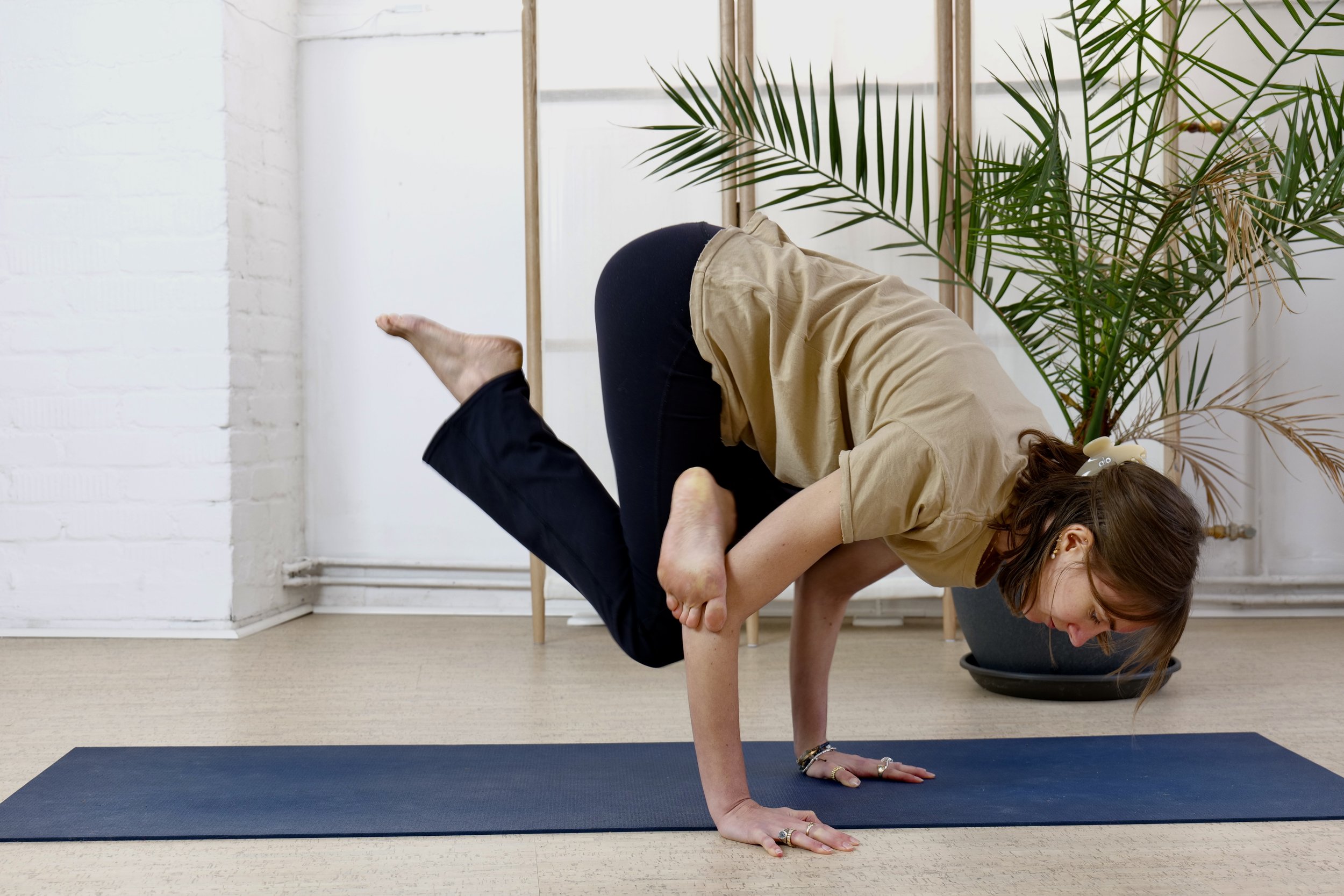
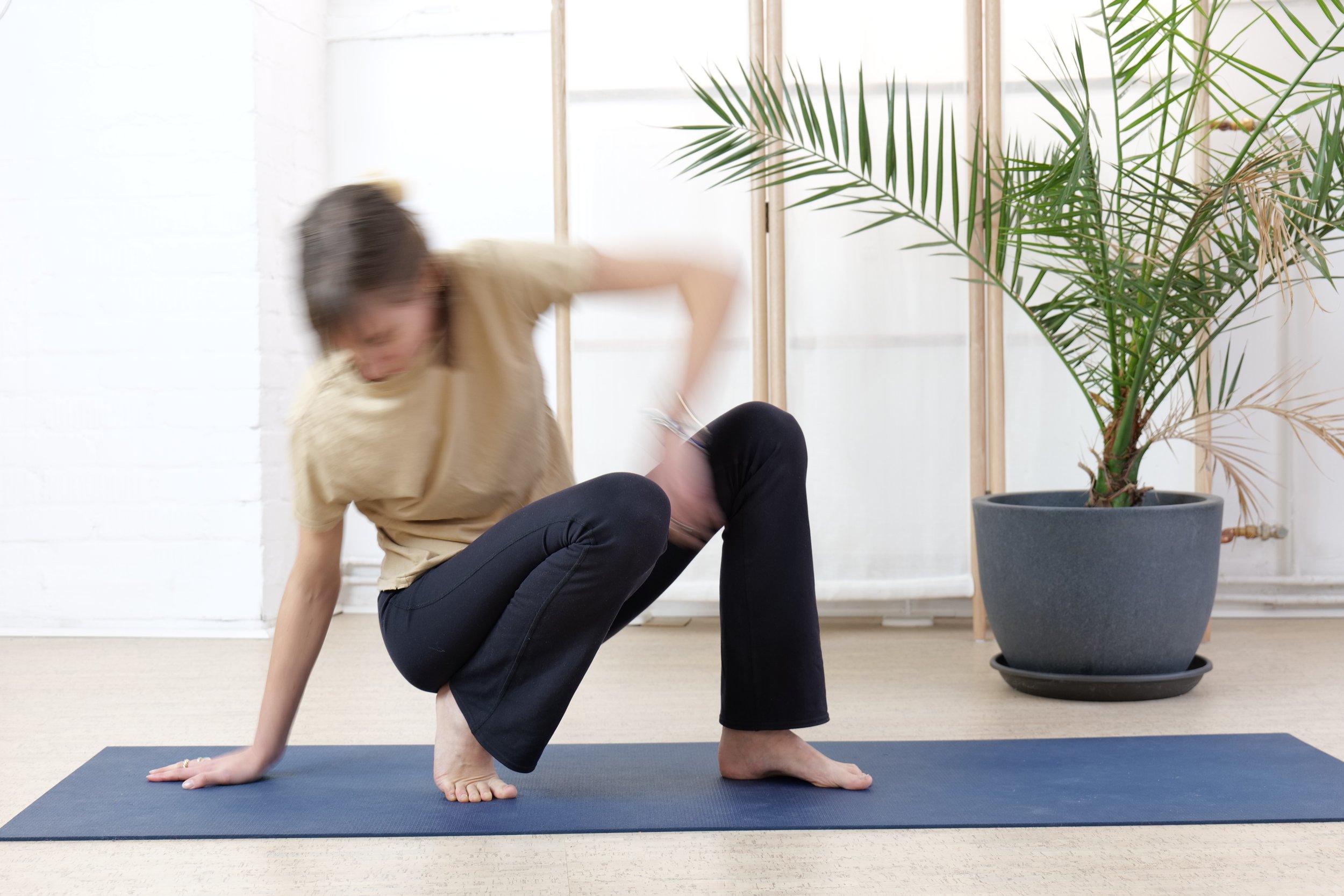
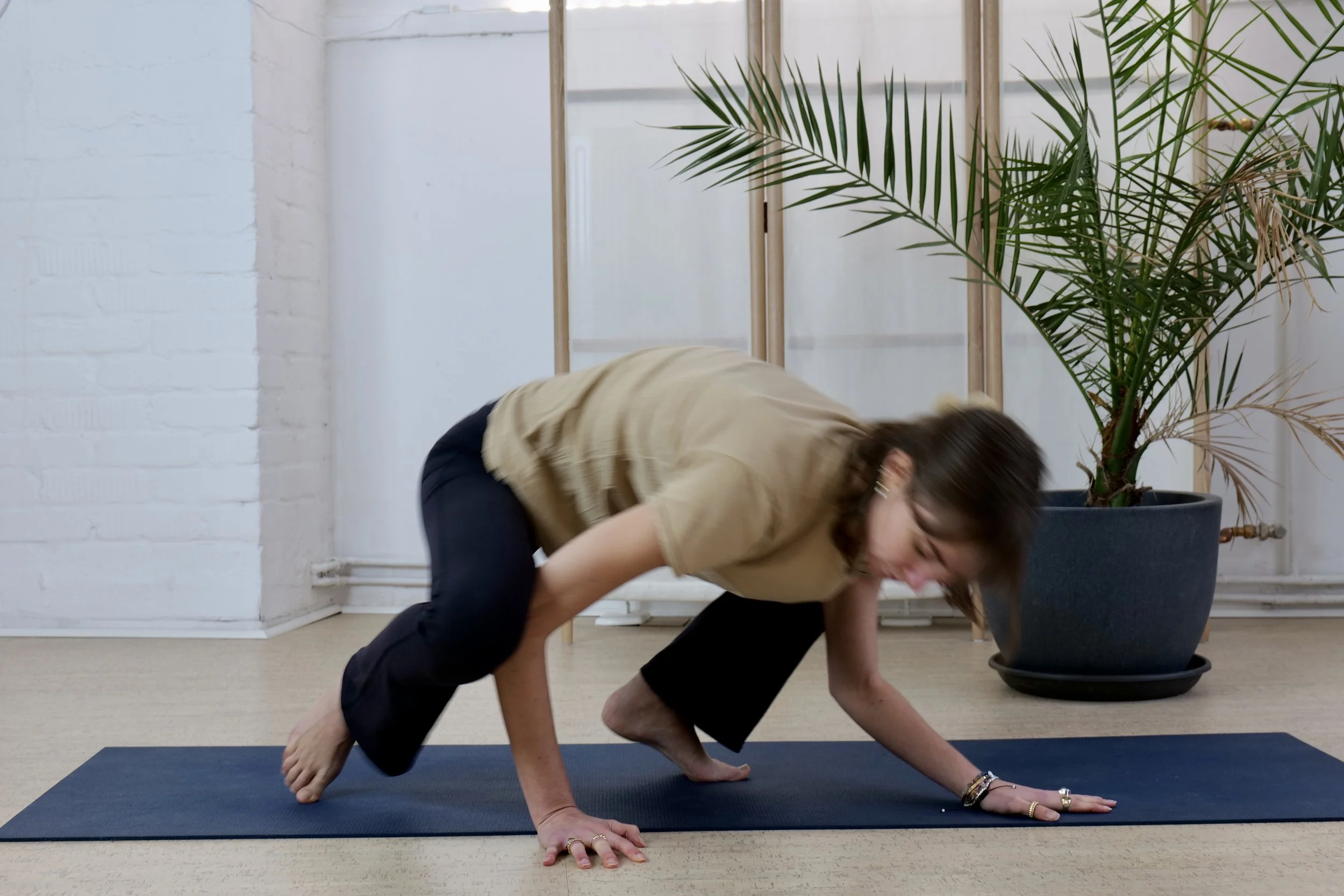
Last week, in an arm balance workshop, a student looked at a flying split and said, "I could never do that, like you."
I told her what I tell most students who say some version of that sentence: she was comparing herself to the result of years of practice, not to my starting point. In most cases, people’s starting point was better than mine had been. The ability I have now did not arrive pre-installed. It came from investigating, trying variations, learning mechanics, staying curious when something didn't work, and slowly expanding what was available to me. Curiosity was an essential part of the practice, not just decoration on top.
We stayed with this pose a little longer. The aim was to view it as a place where one can be moved around it. Instead of trying to force the final shape, the student started exploring: what would happen if she shifted her weight before lifting her foot. It came up easily. Not because she'd gotten stronger in the last few minutes, but because she'd stopped repeating the same pattern with force and started exploring the actual mechanics underneath it.
This is worth saying plainly, because it runs against the instinct most people bring into a advanced poses: that focus and discipline mean gripping harder, trying the same thing again with more force. In practice, the opposite is usually true. A student who fixates on achieving the rigid final shape is more likely to encounter struggle and can even get hurt more easily than one who stays curious about what's happening underneath it. Curiosity actually protects you, because it keeps you paying attention opening up other options instead of pushing through.
I see the same pattern constantly in the art world too. Someone asks me what I do at a dinner party, I tell them, and the answer that comes back is almost a script: "Oh, I don't know anything about art." A polite retreat, delivered before the conversation has even started. They assume there's a correct interpretation of art hiding somewhere, and that admitting they don't know or see it immediately means exposing their ignorance.
My response is the same one I give in the studio. Start with curiosity, not knowledge. What catches your attention? What does it remind you of? What happens if you give it another minute? Once the curiosity is there, the knowledge grows around it on its own. You look up the artist. You start noticing echoes of the piece in other work. The world gets larger because you've found a reason to walk further into it.
I recently heard the same idea from a completely different direction. On Bloomberg's Odd Lots podcast, Meredith Kopit Levien, the CEO of The New York Times, was asked what the Times actually is. She didn't describe a business or an industry. "I think The New York Times is the essential service for curious people everywhere who want to understand and engage more deeply with and enjoy the world," she said. Later she came back to the same idea from the reader's side: the world is "filled with curious people who want uncompromised information." It isn't a product built for people who already know what they're looking for. It's built for people who want a reason to keep entering the world. Hearing that from someone running a company at that scale felt like an odd kind of confirmation. The mechanism she's describing across millions of readers is the one I'm working with in a single class.
Movement works the same way. Nobody has to start as an expert in biomechanics or be super strong and flexible to become interested in what's happening when they move. If you are curious possibilites open up.
And once you're asking better questions, movement gets more precise, not less. Where does this movement actually begin? What happens if I shift my weight before I lift the leg? Why are my shoulders working this hard? Can my torso carry more of this? What changes if I soften something before I try to generate force? These questions are how you arrive at places more easily while acquiring knowledge. They help to learn and understand technical skills and the mechanics of movements more easily as the become something you can feel.
That's also why I don't treat curiosity and performance as opposites. Widening what you notice tends to improve what you can do. Understanding how you're distributing effort usually makes that effort more efficient. Understanding weight transfer makes a hard movement easier. Cutting unnecessary tension makes the muscular work that's actually useful easier to find. Chasing the answers to curious questions often makes you better at the very thing you were trying to optimize in the first place.
The difference is what happens after. Performance stops being the only way to measure whether the work was worth it. My student left that class with more than learning a singluar arm balance. She learned various ways coming in and out of arm balandces, moving around them and being able to fluently connect several of them. All that because she left being more curious: asking better questions that open up more possibilites.